Das Schmiedember-Highlight: Die Radiofabrik live vom 16.-18. September von der Schmiede 2014

Unser Außenstudio in der Schmiede

Von Dienstag bis Donnerstag gibt es im Magazin um 5 aktuelle Berichte aus dem progessivsten Medienlabor des Landes. Die Radiofabrik sendet live von der Schmiede 2014 auf der Pernerinsel in Hallein.

„SelfAssembling“ – „Selbst-Zusammenfügung“, das ist das Motto der diesjährigen Schmiede Hallein. Der Prozess der Struktur- und Musterbildung, autonom, ohne externe Einwirkungen. Die Schmiede hat vor zwölf Jahren klein begonnen, dieses Jahr zieht sie über 300 Smiths (TeilnehmerInnen) aus ganz Europa nach Hallein, um sich zu vernetzen, Projekte zu entwickeln, umzusetzen und diese schlussendlich zu präsentieren

DSCN0182

Gemeinsam mit FS1 ist die Radiofabrik mit ihrem mobilen Sendestudio auf der Schmiede vertreten und sendet via Live-Stream das Magazin um 5 am Dienstag bereits ab 16:00Uhr und Mittwoch und Donnerstag ab 17:00uhr aus dem alten Salzlager auf der Halleiner Pernerinsel. Es gibt Interviews mit Veranstalter und Smiths zu hören, Impressionen der Workshops und Arbeitsprozesse und vieles mehr.

DSCN0176DSCN0184DSCN0183

Hundeerziehung einst und jetzt

Hundeerziehung früher- Kasernenhofton

Moderne Hundeerziehung – Freiheit für alle

Ist es das, was sich geändert hat?!

Hundeerziehung zum Gähnen?!

Es war wieder eine interessante Sendung, wie ich finde. Mit Herrn Dr. Erik Schmid, Fachtierarzt für Tierhaltung und Tierschutz, habe ich mich beinahe verplaudert. Seine Ausführungen über das Projekt in Sachen „Hundehaltung“, das in seiner Heimatgemeinde Götzis umgesetzt wurde, haben mich ganz besonders begeistert und ich würde die Unterlagen am liebsten sofort an alle Gemeinden im Land Salzburg (und darüber hinaus) schicken.

Durchaus besorgniserregend ist die Tatsache, dass viele Kinder – wie Dr. Schmid es formulierte – über keinerlei Erfahrungsschatz im Umgang mit Tieren mehr verfügen. Umso wichtiger erscheint mir hier der Trend zu Programmen zur Hundebissprävention, wie sie vermehrt in Schulen, Kindergärten etc. angeboten werden.

Auch die folgenden Aktionen bzw. Medien wurden angesprochen und können gerne nachgelesen werden:
„Mehr Platz für Hunde“: www.platzfuerhunde.at
Tapsi komm! Broschüre für Unterricht sowie Schul- bzw. Kinderprogramme

12 Regeln für den Umgang mit Hunden, die Broschüre des VDH gibt es hier als Download.

Gemeinde Götzis „Hundeverordnung“, ein Vorzeigemodell, das viele Nachahmer finden sollte:
Elternbildungsprogramme Dogs & Storks und Dog & Baby: www.familiemithund.info

Moderne Hundeerziehung

Frau Mag. Signitzer-Woral sprach über ihre eigenen Erfahrungen mit Hundeschulen, die weder damals noch heute besonders prickelnd waren, und über die Verantwortung der HundehalterInnen, sich mit der Erziehung des Vierbeiners auseinander zu setzen. Bemerkenswert fand ich auch die Feststellung, man müsste sich heute wesentlich mehr Gedanken darüber machen, wie andere Menschen auf HundehalterIn und Hund reagieren. Das bestätigt sich auch in meiner Wahrnehmung und bei schwarzen Hunden und bestimmten Rassen, die durch die Berichterstattung in Verruf gekommen sind, trifft das noch viel mehr zu.

Hunderunde Servicebox:

Interessante Artikel verschiedener Autoren/Autorinnen rund um moderne und gewaltfreie Hundeerziehung finden Sie unter: Easy-Dogs
Klartext Hund, der Blog von Thomas Riepe klartexthund.blogspot.co.at/

Buchempfehlungen:

Viviane Theby, Verstehe deinen Hund – Kommunikationstraining für Hundefreunde: Amüsant zu lesen – aber absolut nicht oberflächlich: Selten liest man eine so gute Darstellung der „Sprachschwierigkeiten“ zwischen Mensch und Hund. Sehr nett sind auch die Illustrationen von Angelika Schmohl.  Wenn Sie sich schwer tun, Dominanztheorien und Alpha-Getue aus dem Kopf zu kriegen, dann unbedingt dieses Buch lesen.

Von Gudrun Braun und Yvonne Adler stammt das Buch „Mensch und Hund – ein starkes Team: Wie erwirbt man Vertrauen? Was macht eine gute Führungspersönlichkeit aus? Und warum ist überhaupt die Persönlichkeit des Menschen so wichtig für den Hund? Keine neue Anleitung für „sitz“ und „platz“ – aber viel Wichtiges Drumherum!

Elisabeth Beck, Wer denken will, muss fühlen: Die wissenschaftliche Betrachtungsweise über „das Tier“ hat sich von Descartes über Rousseau bis zu Konrad Lorenz, Trummler und Bekoff sehr viel weiter entwickelt und verändert. Die Autorin erstellt (unter anderem) eine klare Übersicht über diese Entwicklung und zeigt auf, dass Modelle und Methoden nur Werkzeuge und Krücken sind, deren Wert sich erst in der Kombination mit Herz und Verstand erweist.

Die Musik zur Sendung:
Marc Knopfler – Wag the dog Lucca
Vienna Choir Boys – Als unser Mops ein Möpschen war
Freddie Fender – Do the dog (bailar el perro)
Rufus Thomas – Walking the dog
Louis Armstrong – Yellow dog blues


„…and the Bishop said: the ways of God are strange!“

[iframe src=“http://cba.fro.at/268924/embed?&socialmedia=true&title=false&subscribe=true&series_link=true“ width=“100%“ height=“250″ style=“border:none; width:100%; height:250;“]


In Stimmen aus den Schützengräben #11 we deal again with War Poetry. The first guest of the episode is Siegfried Sassoon, a British soldier who belongs to the so-called „War Poets„. WWI British war poetry is regarded either as a genre on its own or as a subgenre belonging to the so-called Georgian poetry. The authors – young soldiers and officers fighting on the Western front – used to send their verses to newspapers, and some of their work was thus well-known by the public. In 1985 a memorial was unveiled at the Poet’s Corner in Westminster Abbey. It bears the names of 16 poets, many of whom died in battle. Siegfried Sassoon served as second lieutenant and managed to survive the war.

They

The Bishop tells us: ‚When the boys come back
‚They will not be the same; for they’ll have fought
‚In a just cause: they lead the last attack
‚On Anti-Christ; their comrades‘ blood has bought
‚New right to breed an honourable race,
‚They have challenged Death and dared him face to face.‘

‚We’re none of us the same!‘ the boys reply.
‚For George lost both his legs; and Bill’s stone blind;
‚Poor Jim’s shot through the lungs and like to die;
‚And Bert’s gone syphilitic: you’ll not find
‚A chap who’s served that hasn’t found some change.
‚ And the Bishop said: ‚The ways of God are strange!‘


Siegfried_Sassoon_by_George_Charles_Beresford_(1915)

Siegfried Sassoon (Wikipedia)


Guillaume Apollinaire is a key figure in the cultural scene of early 20th century. In Paris he befriended the foremost intellectuals of his time, such as Pablo Picasso, Blaise Cendrars and Jean Cocteau. He also friends with Giuseppe Ungaretti, who later became the most influential Italian poet of his time. Apollinaire was born in Rome in 1880 from a Polish mother and an unknown father, but later moved to France and was living in Paris at the break of war. He volunteered for the army in December 1914 and served first in the 38th artilery regiment, then as second lieutenant in the 96th infantry regiment. In 1916 he received a severe head wound from a shrapnell, and could never fully recover. In 1918, still weakened, he contracted the Spanish Flu and died. His body was found on the 9th of November by his friend Ungaretti, who wanted to pay him a visit in Paris.

The life on the front left a deep trace in some of Apollinaire’s writings. The poet had a contraddictory vision of war, and managed to create astonishing metaphors from its dreadful images. In the selected poem, for exemple, he compares a shell – a beautiful shell – to a mimosa in bloom.


Second Lieutenant Guillaume Apollinaire (Wikipedia)

Second Lieutenant Guillaume Apollinaire (Wikipedia)


Si je mourais là-bas“

Si je mourais là-bas sur le front de l’armée
Tu pleurerais un jour ô Lou ma bien-aimée
Et puis mon souvenir s’éteindrait comme meurt
Un obus éclatant sur le front de l’armée
Un bel obus semblable aux mimosas en fleur

Et puis ce souvenir éclaté dans l’espace
Couvrirait de mon sang le monde tout entier
La mer les monts les vals et l’étoile qui passe
Les soleils merveilleux mûrissant dans l’espace
Comme font les fruits d’or autour de Baratier

Souvenir oublié vivant dans toutes choses
Je rougirais le bout de tes jolis seins roses
Je rougirais ta bouche et tes cheveux sanglants
Tu ne vieillirais point toutes ces belles choses
Rajeuniraient toujours pour leurs destins galants

Le fatal giclement de mon sang sur le monde
Donnerait au soleil plus de vive clarté
Aux fleurs plus de couleur plus de vitesse à l’onde
Un amour inouï descendrait sur le monde
L’amant serait plus fort dans ton corps écarté

Lou si je meurs là-bas souvenir qu’on oublie
– Souviens-t’en quelquefois aux instants de folie
De jeunesse et d’amour et d’éclatante ardeur –
Mon sang c’est la fontaine ardente du bonheur
Et sois la plus heureuse étant la plus jolie

Ô mon unique amour et ma grande folie

30 janv. 1915, Nîmes.

The third selected author is Ludwig Bäumer (1888-1928). He took part in WWI as a non-commissioned officer and after the conflict developed strong anti-war ideals.


Ludwig Bäumer painted by Christian Schad, 1927 (Photobucket)

Ludwig Bäumer painted by Christian Schad, 1927 (Photobucket)


Dämmerung im Graben

Wir sind längst mehr als dreimal verleugnet. In unsern Gebärden
Fielen alle Sehnsüchte zusammen, alle die waren
In unsern Müttern und Vätern. Wir stehn vor unsern Bahren
Und fangen Tode auf, damit wir zu Ende werden.

Denn das ist unser Sinn: Wir sind Kinder einer Zucht ohne das Sträuben
Von Kindern gegen ihre Zucht. Stärkelos! Wir haben die Augen
Die im eigenen Gehirn wühlen und Schmerzen saugen.
Wir sind längst mehr als dreimal verleugnet
Und müssen mehr als einen Gott betäuben.

Uns ist keine Wiederkehr gesegnet und unserm Weinen kein Amen
Zärtlicher Munde, die einmal vor Süße brachen.
Unsere Mütter versagten,
Die uns beklagten:
Wir staunen über die, die den Weg der Mütter kamen.

Und das verläßt uns nicht. — — Vielleicht wenn wir einmal wissen,
Daß wir Kinder des Irrtums sind und darum Unverzeihliche der Zeit,
Vielleicht dann … Was? … Stärkelos … Ein Land bleicht weit,
Und viele fielen, und wir sehnen uns in reine Kissen.

(Bereitschaft 1. Februar 1916.)

The fourth „guest“ of the week is Wilfred Owen (1893-1918), another British war poet. Owen served as a second lieutenant and was severely wounded by a trench mortar round. He also suffered of „shell-shock“ (PSTD), a condition that was not fully understood at the time. Owen was killed in action a week before the end of the war. The selected poem is probably Owen’s best known, and one of the most significant among British war poetry.


Wilfred Owen (http://www.oucs.ox.ac.uk)

Wilfred Owen (http://www.oucs.ox.ac.uk)


Dulce et Decorum est

Bent double, like old beggars under sacks,
Knock-kneed, coughing like hags, we cursed through sludge,
Till on the haunting flares we turned our backs
And towards our distant rest began to trudge.
Men marched asleep. Many had lost their boots
But limped on, blood-shod. All went lame; all blind;
Drunk with fatigue; deaf even to the hoots
Of tired, outstripped Five-Nines that dropped behind.

Gas! Gas! Quick, boys!–An ecstasy of fumbling,
Fitting the clumsy helmets just in time;
But someone still was yelling out and stumbling
And flound’ring like a man in fire or lime…
Dim, through the misty panes and thick green light,
As under a green sea, I saw him drowning.

In all my dreams, before my helpless sight,
He plunges at me, guttering, choking, drowning.

If in some smothering dreams you too could pace
Behind the wagon that we flung him in,
And watch the white eyes writhing in his face,
His hanging face, like a devil’s sick of sin;
If you could hear, at every jolt, the blood
Come gargling from the froth-corrupted lungs,
Obscene as cancer, bitter as the cud
Of vile, incurable sores on innocent tongues,–
My friend, you would not tell with such high zest
To children ardent for some desperate glory,
The old Lie: Dulce et decorum est
Pro patria mori.

The last poem of this episode is by Giuseppe Ungaretti (see episode #6). It was written on the 23th of December 1915 in northern Italy, on the Isonzo front. All along the war, 12 harsh battles were fought in the sector, with heavy losses on both sides. These few verses depict the contrast between the dead body lying next to him and the poet’s craving for life.


Ungaretti in the trenches (on the left) - giordanicaserta.it

Ungaretti in the trenches (on the left) – giordanicaserta.it


Veglia

Un’intera nottata
buttato vicino
a un compagno
massacrato
con la sua bocca
digrignata
volta al plenilunio
con la congestione
delle sue mani
penetrata
nel silenzio
ho scritto
lettere piene d’amore

Non sono mai stato
tanto
attaccato alla vita


-Credits-

Editing: Romana Stücklschweiger , Matteo Coletta.

Voices in this episode: David Hubble as Siegfried Sassoon and Wilfred Owen, Matteo Coletta as Guillaume Apollinaire and Giuseppe ungaretti, Hannes Hochwasser als Ludwig Bäumer

Jingle:

Music: Gregoire Lourme, “Fire arrows and shields
Concept: Matteo Coletta
Voices: Hannes Hochwasser, Matteo Coletta, Roman Reischl, L.J. Ounsworth, Norbert K. Hund.

„lassù c’era solo una galleria nel ghiaccio…“

[iframe src=“http://cba.fro.at/268742/embed?&title=false&socialmedia=true&subscribe=true&series_link=true“ width=“100%“ height=“250″ style=“border:none; width:100%; height:250;“]

Stimmen aus den Schützengräben #10 deals with alpine warfare. The Alps are a natural barrier between the north of Europe and Italy. Their narrow passes and valleys have a great strategic relevance, and they have been crossed through the ages by a plethora of invading armies. Between the 19th and 20th centuries many forts and defensive works were built in northern Italy to defend those precious access points. The Austrian Empire erected about 50 forts in the Italian Tirol („Welschtirol“), which were designed to work together as a defence line but also to resist for a long time if the supplies were to be cut off. The Kingdom of Italy also build several forts to protect the border with Austria (the so-called Sbarramento Agno-Assa) and Switzerland (the so-called Linea Cadorna).


alpini

Italian Alpini lifting a cannon


When Italy declared war to Austria in May 1915, the original plan was to take advantage of the surprise and cross the mountains quickly. The lack of competence and organisation of the Italian headquarters brought the operation to failure, and gave way to attrition warfare. Military commands on both sides were obsessed by the control of  high ground, and troops were deployed on passes and summits. Sometimes the fighting took place at incredible heights, e.g. the Battle of San Matteo (3678m).

The war in the Alps took many different forms. Where possible, roads (like the Road of the 52 tunnels) were built to carry artillery and supplies with the aid of mules. In several occasions tunnels were dug under enemy positions, to put mines under them: e.g. on the 13th March 1918 an astonishing 50.000 Kg of TNT blew under the Italian lines on mount Pasubio. However, the battlefield was often too unaccessible to allow the huge deployments of men and means that were typical of WWI.  On some summits and observation points the garrisons consisted of only a few dozen men, and skirmishes between patrols took the place of massive assaults. In such conditions, the men accomplished real alpinistic exploits, and Nature was often more dangerous than the enemy: on one single night, between the 12th and 13th of December 1916, about 10.000 soldiers’s lives were taken by avalanches on the Alpine front.


Austrian Soldiers ready for a gas attack in the mountains (Österreichische Nationalbibliothek)

Austrian Soldiers ready for a gas attack in the mountains (Österreichische Nationalbibliothek)


The first „guest“ of this week is the Austrian Kaiserjäger Ludwig Pullirsch (the Kaiserjäger were a light infantry corp recruited mostly in the alpine regions of southern Austria). In a short extract from his memories he relates of an exhausting march, where he had to carry a 30 Kg backpack and climb a height difference of 1600 meters. These events took place in May 1916, on the Adamello-Presanella mountain range. Pullirsch survived the war and wrote several diaries, some extracts have been collected by his son at: http://www.menschenschreibengeschichte.at/index.php?pid=30&ihidg=13948&kid=1181. The full memories have been published under the title „Hineingeboren“, ISBN 978-3-940582-07-2.

The second „guest“ of the week is Giacomo Pesenti, an Italian Alpino (the Alpini are the oldest elite corp of mountain troops in the world. During WWI those soldiers were mostly recruited in the alpine regions of northern Italy) . Pesenti volunteered for the army in May 1915, as soon as the war broke out between Italy and Austria, and was awarded the silver medal of honour for his courage. Many years after the war he wrote his memories to pass down the legacy of those terrible events. In the selected passage he relates of a 3-days watch in a ice hole on the Thurwieser pass (3480m), together with 30 other soldiers; the cold was extreme and the enemy was hiding 50 meters below. The short extract comes from the book „La Grande Guerra in Lombardia“, by Giuseppe Magrin, and it is set between 1916 and 1917.


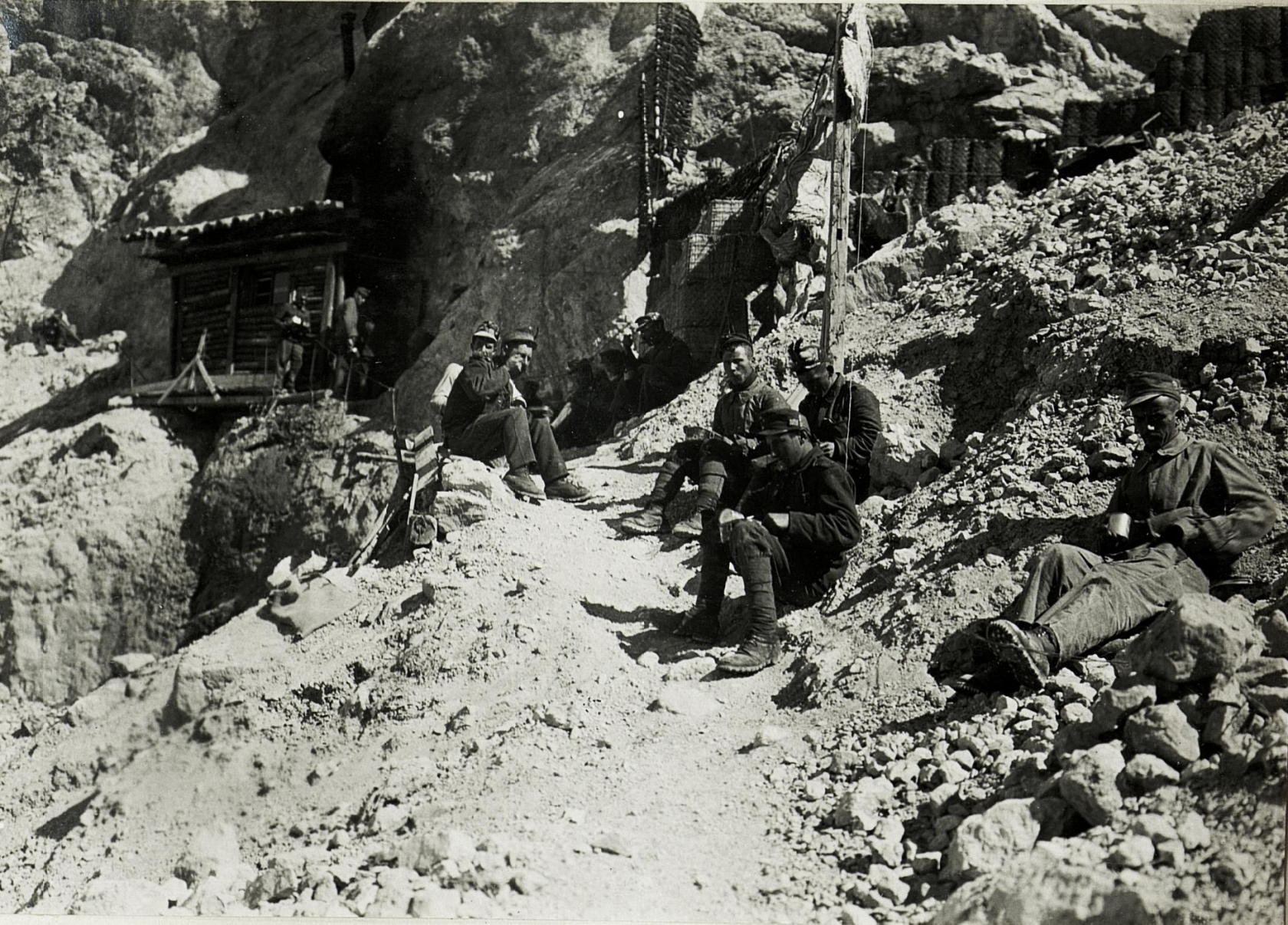
Austrian cabin on the verge of a cliff (Österreichische Nationalbibliotek)

Austrian cabin on the verge of a cliff (Österreichische Nationalbibliotek)


The third guest is Austrian soldier Thomas Bergner. He Fought the war on the Italian front and died in 1926, aged 38,  as a result of the wounds and illnesses contracted during the war. In 1915 he was sent to the Isonzo valley, in present-day Slovenia, and in an entry dated 20th of July he gives an account of his first day in the new positions. The artilleries were shooting and the mountain was quite hostile: falling rocks were a constant threat.

The last passage is taken from the book „Un anno sull’altipiano“, by Emilio Lussu (see episode #8). In spring 1916, while coming back from a scouting mission on the Asiago plateau (ep. #2), Lussu met an Italian colonel. The conversation between them quickly became surreal: the colonel criticised harshly the strategical decisions of Italian high commands: what was the point of defending the top of a mountain, if no artillery was there to protect the valley? The enemy could have ignored it, and advance quickly towards the south. But the high commands are the same everywhere: eventually the Austrian army lost time and men trying to get the „key position„, and lost its precious chance.


-Credits-

Editing: Laura Leitner, Matteo Coletta.
Commentary: Laura Leitner.

Voices in this episode: Alex Huemer as Ludwig Pullirsch,  Matteo Coletta as Giacomo Pesenti and Emilio Lussu, Roman Reischl as Thomas Bergner.

Jingle:

Music: Gregoire Lourme, “Fire arrows and shields
Concept: Matteo Coletta
Voices: Hannes Hochwasser, Matteo Coletta, Roman Reischl, L.J. Ounsworth, Norbert K. Hund.
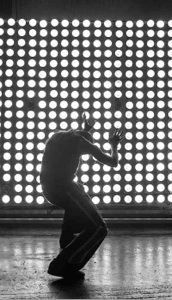


Szenenwechsel Graz: Indiepartment und LeTamTam

Indiepartment

Die Sterne, The Notwist, Crocodiles, Scout Niblett uvm. Seit 6 jahren veranstalten 6 Musikliebhaber Bands aus aller Welt um sie auf die heimischen Bühnen nach Graz zu holen. Keine Businessman, sondern alles aus reiner Leidenschaft und Interesse an der Musik. Wie das funktioniert, was Popförderdung bedeutet, und was man mit Bands schon alles erlebt hat erzählen die Burschen vom Verein Indiedepartment.

LeTamTam

5 Jahre ist es her dass man ein Lebenszeichen von den rockigen Elektro Schraubern vom Duo LeTamTam auf Platte gehört hat. Jetzt haben sie eine Split EP  auf dem Grazer Label Willhelmshowmethemajorlabel herausgebracht. Tracks der Veränderung – musikalisch und auch menschlich. Mittlerweile sind sie teilweise Familienväter und leben wieder auf dem Land. Ebenfalls vertreten auf der EP ist Johnny Glimmer aka Martin Parrier, der vielleicht schon jetzt der würdevolle Nachfolger von LeTamTam ist, die sich eher von Veröffentlichungen verabschieden wollen.

Sendung nachhören: http://cba.fro.at/268503

War früher alles besser?

War früher das Leben für Hunde besser?

Oder schlechter? Oder einfach nur anders? Was hat sich im Bezug auf Hundehaltung und Hundeerziehung verändert? Waren Hunde früher besser erzogen oder hatte man einfach nur ganz andere Erwartungen?

Unser Umgang mit Hunden…

Karin im Studio

Im Studio der Radiofabrik

hat sich in den vergangenen 20 Jahren viel verändert – auch wenn manche Zeitgenossen das so gar nicht wahr haben wollen.

Über Veränderungen in der Herangehensweise, in den Erwartungen an unsere Hunde, über Hunde und Menschen plaudere ich in der Sendung mit Mag. Claudia Signitzer-Woral, die seit ihrer Kindheit einen Hund an ihrer Seite hat. Sie erzählt über ihre Erfahrungen in der Hundeschule, die sie  vor 30 Jahren besucht hat. Und über die Erfahrungen, die sie mit ihrer jetzigen Hündin Kyla, ihrem „Schulhund“ gemacht hat. War Spazieren gehen mit dem Hund früher einfacher? Ist man überhaupt soviel Spazieren gegangen? Und unsere Erwartungen an die Erziehung unserer Hunde, sind die nicht wesentlich höher geworden?

Hören Sie, was meine Gesprächspartner Herr Dr. Schmid und Frau Mag. Signitzer-Woral zu sagen haben – wir freuen uns auf Sie!

Natürlich gibt es auch wieder Musik in der Sendung, bei der es ebenfalls um Hunde geht. Mit von der Partie sind diesmal unter anderem Marc Knopfler und Freddie Fender.


„In der Nacht hat man uns noch 30 gefangene Serben gebracht…“

[iframe src=“http://cba.fro.at/268377/embed?&title=false&socialmedia=true&subscribe=true&series_link=true“ width=“100%“ height=“250″ style=“border:none; width:100%; height:250;“]

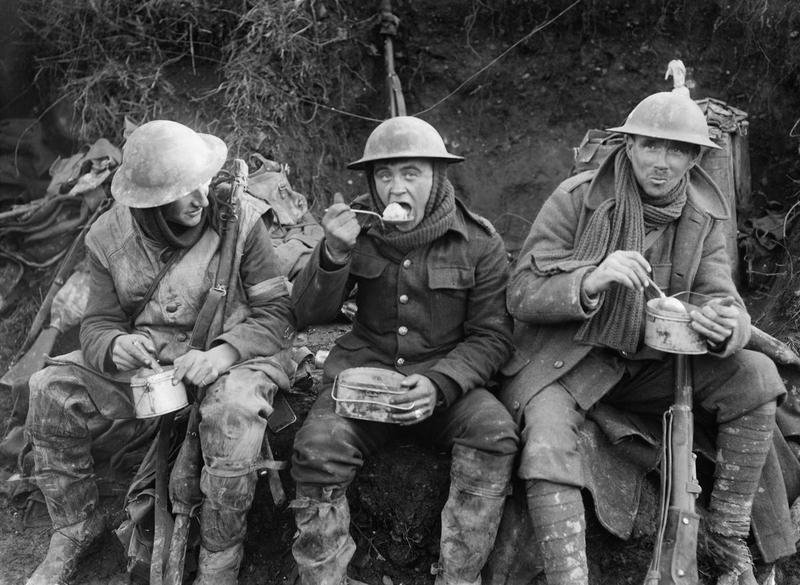
Stimmen aus den Schutzengräben #9 is dedicated to prisoners of war. More than 7 million soldiers were held prisoners during WWI. Many civilians were imprisoned as well, to be kept as hostages. The treatment of captive soldiers was disciplined by the Hague Conventions of 1899 and 1907 (see episode #5). Here follows a selection of interesting articles:

„Prisoners of war are in the power of the hostile Government, but not in that of the individuals or corps who captured them. They must be humanely treated. All their personal belongings, except arms, horses, and military papers remain their property.“ (Art. 4)

„The Government into whose hands prisoners of war have fallen is bound to maintain them. Failing a special agreement between the belligerents, prisoners of war shall be treated as regards food, quarters, and clothing, on the same footing as the troops of the Government which has captured them.“ (Art. 7)

„Work done for the State shall be paid for according to the tariffs in force for soldiers of the national army employed on similar tasks. “ (Art. 6)

„Officers taken prisoners may receive, if necessary, the full pay allowed them in this position by their country’s regulations, the amount to be repaid by their Government.“ (Art. 17)

Austro-hungarian prisoners in Russia, 1915. Rare colour picture taken by Sergey Prokudin-Gorsky (Wikipedia)

Austro-hungarian prisoners in Russia, 1915. Rare colour picture taken by Sergey Prokudin-Gorsky (Wikipedia)

The turn of events, however, prevented often from applying the Convention, especially in the Central Empires where the food was scarce and mostly sent to the frontline. The death rate among prisoners could vary a lot. The hardest conditions were suffered from the prisoners held in Russia, of which 25% died of sickness, starving, cold and fatigue. In Germany, despite the food shortage, the fatalities amounted to 5%.

The first „guest“ of the week is Carl Schmidt (see episode #8). His letter, written on the 28 October 1915, is not always clear. It is sure that, in the night between the 27th and the 28th, 30 Serbian prisoners were brought to him while he was sleeping in a pigsty. He affirms that he massed all the Serbians „one on top of each other“ in a pigsty where normally 4 German soldiers would barely fit. He then adds that he „would have ordered the pigs to be shoot down, if they hadn’t been already registered by the battalion“. Does he mean the animals, or the prisoners? Unsettling question…A transcription of Carl Schimdt’s letters is available at: http://www.europeana1914-1918.eu/de/contributions/436.

inglesi prigionieri

British soldiers captured by the Germans,1918 (http://www.vlib.us/)

The second „guest“ Is Carlo Pokrajac, soldier of the Austro-Hungarian army. He was born in Istria, a region that was under Austrian control at the time, and today belongs to Croatia. In the beginning of the 20th century both Slavic and Italian families inhabited the region, that is why his diary is written in Italian. Pokrajac was taken prisoner in July 1915 while fighting the Russians on the eastern front. He had been drafted only 90 days before, and spent the rest of the war in captivity. In the selected passage of his diary he writes about his capture and his first impressions of the Russians. The enemies, he says, were not so terrible as they were depicted by the propaganda, and they took care of all the wounded regardless of their nationality. Longer extracts of his diary are available at: http://www.grandeguerra.ccm.it/scheda_archivio.php?goto_id=1219.

The third „guest“ is Charles Guilbert, a French cavalryman. On the 15th of October 1915 he was wounded and captured in a German ambush. The Germans took care of his wounds and gave him something to eat and drink, then they brought him in a stable. Suddenly French artillery shells and mashinegun bullets started falling all around, and the Germans left. The next day, Guilbert found out that he was left alone, and eventually a British patrol rescued him. His memories are available at: http://ppognant.online.fr/G141802.html.


-Credits-

Editing: Laura Leitner, Matteo Coletta.
Commentary: David Leberbauer.

Voices in this episode: David Leberbauer as Carl Schmidt,  Matteo Coletta as Carlo Pokrajac und Charles Guilbert.

Jingle:

Music: Gregoire Lourme, “Fire arrows and shields
Concept: Matteo Coletta
Voices: Hannes Hochwasser, Matteo Coletta, Roman Reischl, L.J. Ounsworth, Norbert K. Hund.
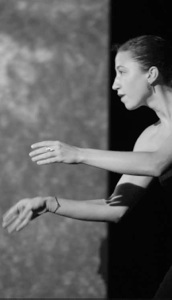


Zurück aus der Sommerpause – Toi-Art und Herbstprogramm

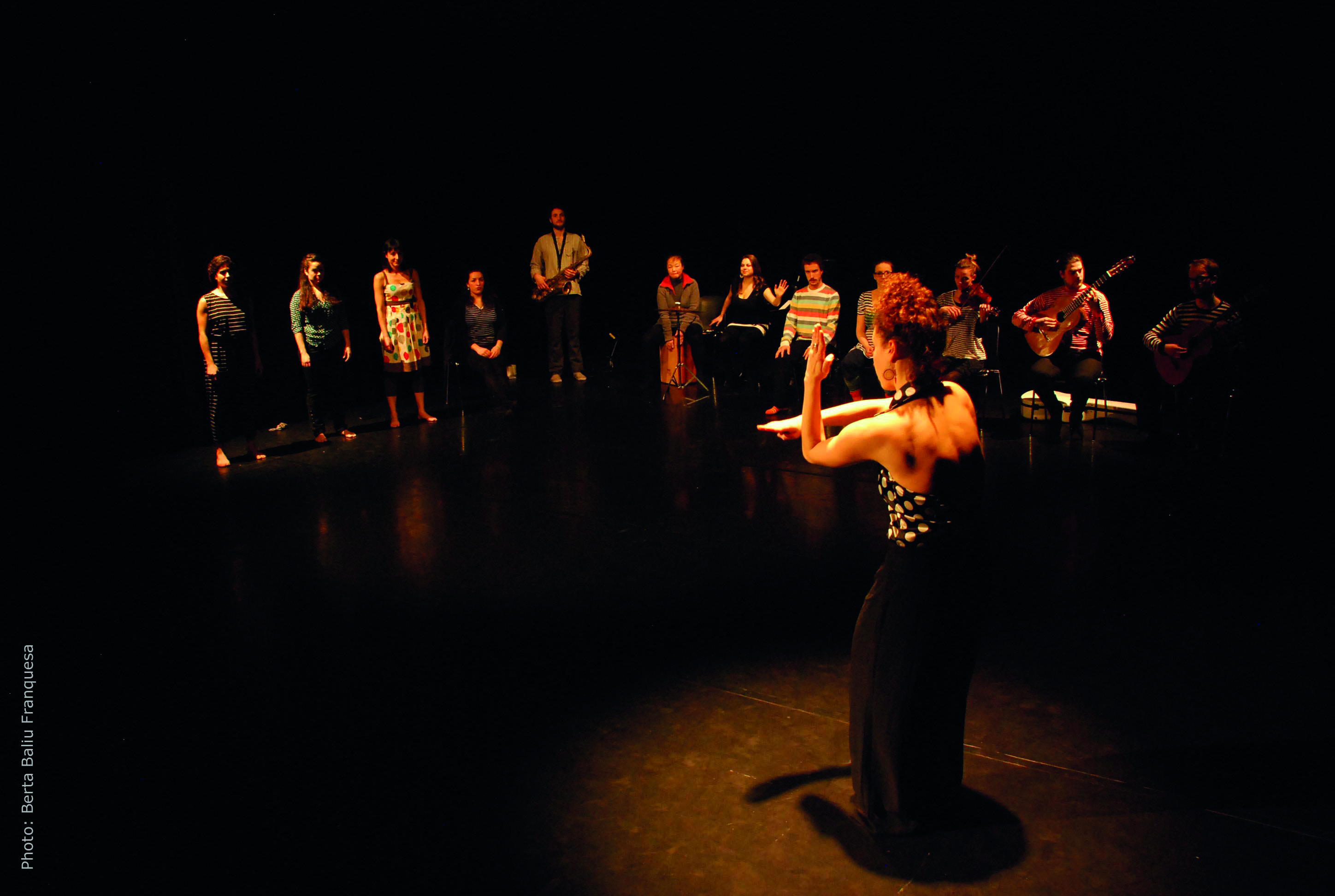
„So A Theater“ meldet sich aus der Sommerpause zurück, denn im Toihaus herrscht schon wieder reger Betrieb. Kaum ist der Sommer vorbei wird schon wieder am neuen Programm getüftelt und das hat diesmal wieder so einiges zu bieten: In der kommenden Saison stehen neben Abendstücken, Theater für Kinder, Gastspielen und Workshops noch eine Menge anderer Dinge auf dem Programm: Im Dezember feiert das Toihaus sein 30jähriges Jubiläum, das Projekt „Tanzwut“ wird weitergeführt und auch das BIMBAM-Festival, das internationale Theaterfestival für Kinder findet wieder statt.

Ihr hört in der heutigen Ausgabe von So A Theater eine kleine Vorschau auf die kommenden Stücke im Herbst, Anfang Oktober geht es gleich mit den ersten Produktionen los. Ihr erfahrt heute etwas über ‚Licht und Schatten‘, eine Tanz und Musikperformance – hier setzt sich Katharina Schrott genau mit diesem Thema auseinander: Wie stehen Licht und Dunkelheit sich gegenüber und was spiegeln diese beiden Gegensätze wieder? Dann begibt sich das Toihaus wieder mal auf Besuch in die Residenzgalerie und spielt: „Toiart im Museum“. Und dann hört ihr noch etwas über „T.B.A“, einer Performance, die nur mit Musik und Sprache arbeitet, entwickelt von Hüseyin Evirgen. Alles dazu in der erstem September-Ausgabe von „So A Theater“.

Du musst ihm zeigen, wer der Herr ist

Früher war „Du musst ihm zeigen, wer der Herr ist“ und heute „dürfen“ wir die Hunde wenigstens schon als Lebewesen beachten.

Zitat aus meiner Facebook-Umfrage.

Es gibt ja immer noch Menschen, darunter leider auch Trainer und Trainerinnen, die neue Erkenntnisse und Entwicklungen in der Hundeszene nicht zur Kenntnis nehmen. Besonders das Fernsehen leistet seinen zweifelhaften Beitrag zu Rückschlägen und reaktionären Tendenzen. Ich glaube, es war David Mech, der einmal geschrieben hat, dass es 25 Jahre dauert, bis neue wissenschaftliche Erkenntnisse auch tatsächlich in der Praxis ankommen.

Artig in der Schule

Auch kleine Hunde gehen in die Schule

Das erste Interview für die nächste Sendung „Hundeerziehung einst und jetzt“ ist im Kasten. Dr. Erik Schmid, Kommunalpolitiker, Fachtierarzt für Tierhaltung und Tierschutz, war ein interessanter Gesprächspartner. Beim Plaudern sind wir ein wenig vom Thema abgekommen und sind von der Hundeerziehung im Speziellen bei der Hundehaltung im Allgemeinen gelandet. Macht aber gar nichts, es war ein gutes Gespräch!

Dr. Schmid stellte im Verlauf des Gesprächs ein Vorzeigemodell von 4 Vorarlberger Gemeinden vor. Stichwort „Führpflicht statt Leinenpflicht“. Von so viel Kreativität, Offenheit, Mut zur Zusammenarbeit und gegenseitigem Respekt“ kann man in manchen Gemeindestuben nur träumen. Ein Projekt, das sich viele Nachahmer verdient hat und ich hoffe sehr, dass wir ein wenig zur Verbreitung dieses tollen Konzeptes beitragen können.